
Are Property Taxes High in Las Vegas? A Detailed Breakdown for Homeowners
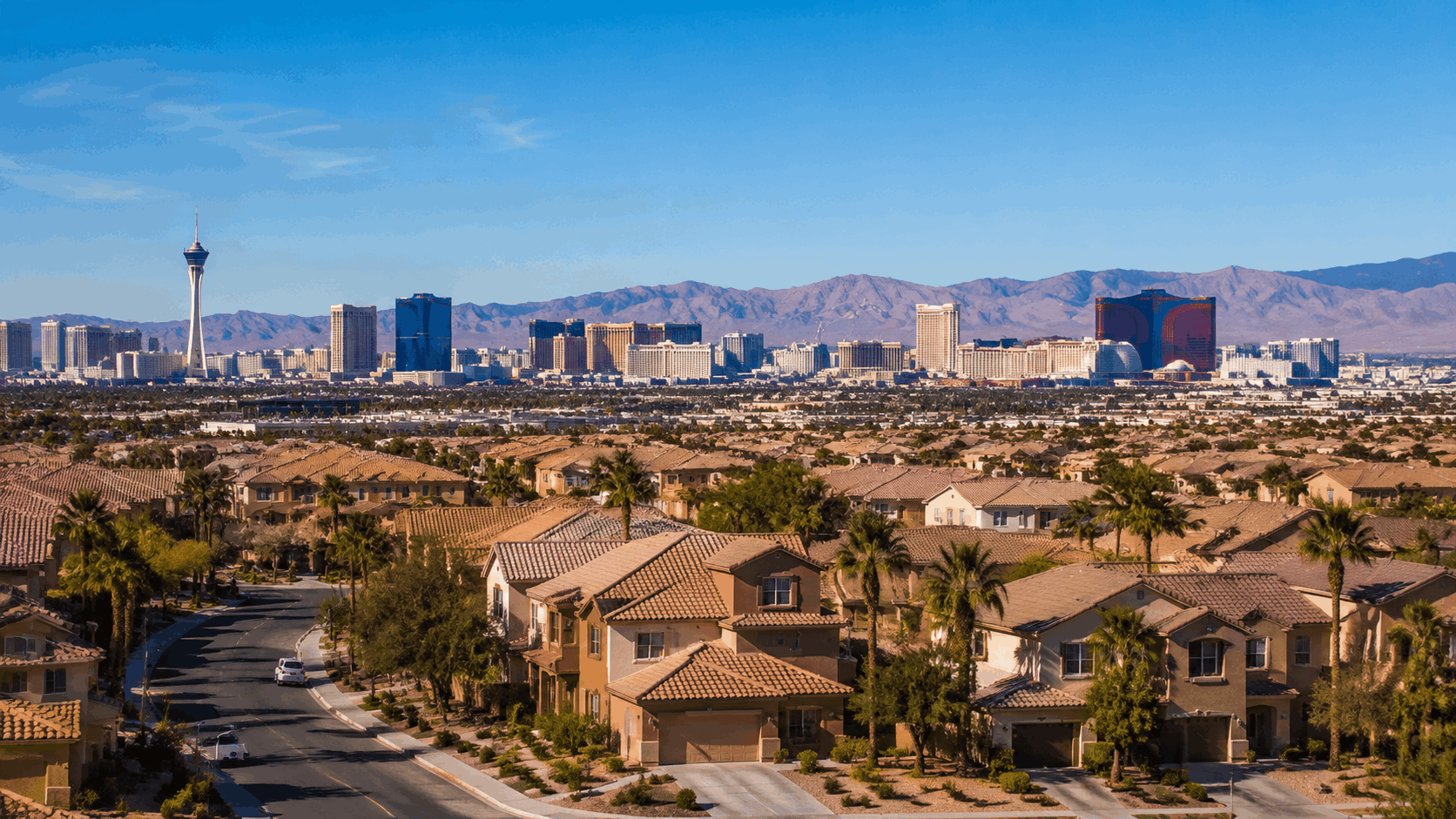 Are Property Taxes High in Las Vegas? A Detailed Breakdown for Homeowners
Quick Answer
Property taxes in Las Vegas and Clark County are generally considered relatively low compared with many parts of the country, but there is an important catch: Nevada property taxes are not calculated simply by multiplying your purchase price by a fixed percentage.
Nevada uses a system based on a property's taxable value, assessed value, local tax district rate, and, when applicable, a property tax abatement that limits how quickly a qualifying tax bill can increase.
One of the most important things to understand is that Nevada's commonly discussed 3% and 8% property tax caps apply to increases in qualifying property tax bills, not to increases in the property's taxable or assessed value.
For a qualifying owner-occupied primary residence, the annual increase in property taxes is generally limited to 3%. Other properties, including many investment properties, second homes, and commercial properties, may receive an abatement limiting increases to no more than 8%, subject to Nevada's applicable tax-abatement rules.
That distinction matters because Clark County reassesses real property annually. Your property's taxable and assessed values can change by more than 3%, while the tax abatement may still limit how much of that increase actually shows up on your tax bill.
Who This Guide Is For
If you're trying to understand the true cost of owning property in the Las Vegas Valley, this guide is for you.
- First-Time Buyers: Understand how property taxes affect your total monthly housing payment.
- California-to-Las Vegas Buyers: Learn how Nevada's system differs from California's Proposition 13 system.
- Investors: Estimate property taxes more accurately when calculating cash flow and long-term holding costs.
- New Construction Buyers: Understand why the tax amount shown during the early stages of construction may not represent the eventual tax bill once the home is fully assessed.
- Retirees and Long-Term Homeowners: Understand how Nevada's tax-abatement system can help limit increases in qualifying property tax bills over time.
- Luxury Buyers: Learn why the specific property's taxable value and tax district matter more than applying a generic percentage to the purchase price.
How Las Vegas Property Taxes Are Calculated
Clark County property taxes are not calculated directly from the price you pay for a home.
Instead, the calculation starts with the property's taxable value.
Step 1: Determine the Taxable Value
For real property in Clark County, taxable value generally consists of:
- The market value of the land, plus
- The current replacement cost of the improvements, such as the house, less applicable statutory depreciation.
Clark County generally applies depreciation to improvements based on their effective age, subject to limits established under Nevada law.
This is why a home's taxable value may be different from its listing price, appraised value, or recent sales price.
You can review a property's current taxable and assessed values through the Clark County Assessor .
Step 2: Calculate the Assessed Value
Nevada sets assessed value at 35% of the property's taxable value.
For example, if a property has a taxable value of $500,000:
$500,000 × 35% = $175,000 assessed value
Step 3: Apply the Local Tax Rate
The tax rate depends on the property's specific tax district.
Property tax rates are commonly expressed as a dollar amount per $100 of assessed value.
For the 2026-2027 fiscal year, examples of combined tax rates in the Las Vegas Valley include approximately:
- City of Las Vegas: $3.2782 per $100 of assessed value
- Henderson: $2.9613 per $100 of assessed value
- North Las Vegas: $3.3544 per $100 of assessed value
- Summerlin tax district: approximately $2.9328 per $100 of assessed value
Rates can vary by tax district and can change from one fiscal year to another, so always verify the current rate for the specific property.
Current district rates are available through the Clark County Treasurer .
Example: Calculating Property Taxes
Let's use a simplified example involving a property with a $500,000 taxable value.
Notice that I'm using taxable value rather than purchase price because the two numbers are not necessarily the same.
- Taxable Value: $500,000
- Assessed Value: $500,000 × 35% = $175,000
- Example Summerlin Tax Rate: $2.9328 per $100 of assessed value
- Calculated Tax Before Applicable Abatement: $175,000 ÷ 100 × $2.9328 = approximately $5,132.40 per year
That works out to approximately $427.70 per month.
However, that does not necessarily mean the homeowner will actually pay exactly $5,132.40. If the property qualifies for Nevada's tax-abatement program, the amount owed may be lower because the abatement can limit the increase from the previous year's tax bill.
That's why looking only at a home's purchase price or even its current assessed value doesn't always tell you exactly what the next tax bill will be.
Understanding Nevada's 3% Property Tax Cap
Nevada's property tax abatement is one of the most misunderstood parts of the state's property tax system.
For a qualifying owner-occupied primary residence, the increase in the applicable property tax bill is generally limited to 3% per year.
The key phrase is tax bill.
Nevada does not simply freeze a home's assessed value or prevent assessed value from increasing by more than 3%.
Clark County continues to value property each year. The abatement is then considered when determining how much tax is actually due.
This can create situations where two homes with similar market values have noticeably different property tax bills.
What About Investment Properties and Second Homes?
Properties that do not qualify for the 3% owner-occupied cap may qualify for Nevada's general tax abatement, which limits increases in property taxes to no more than 8% per year, subject to the applicable statutory calculation.
This can apply to many:
- Rental properties
- Second homes
- Vacation homes
- Commercial properties
- Other non-owner-occupied real estate
Investors should not simply assume that property taxes will equal a fixed percentage of the purchase price.
Look at the property's current tax history, current taxable value, tax district, existing abatement, and how the property will be used after closing.
Does Buying a Home Reset the Property Taxes?
This is an especially important question for buyers moving from California.
Nevada does not use the same system as California, where a change in ownership generally establishes a new base-year value based on current fair market value.
In Nevada, the property's taxable value is determined under Nevada's assessment methodology. A sale does not simply cause the assessor to replace the existing taxable value with the new purchase price.
However, a change in ownership can affect the property's tax-abatement status, especially when determining whether the property qualifies as an owner-occupied primary residence.
Buyers should make sure Clark County has the correct ownership and occupancy information after closing.
New Construction Property Taxes
Property taxes on new construction deserve extra attention because the tax bill shown while the home is being built may not represent the eventual tax bill on the completed property.
Early in construction, the property may be assessed primarily on land or on only partially completed improvements.
Once the completed home is added to the tax roll, the taxable value of those new improvements can significantly increase the property's total taxable and assessed value.
Newly constructed value generally does not receive the same accumulated tax abatement that an established property may already have.
This means buyers should be careful about relying on the seller's, builder's, or vacant-land tax bill when estimating their future housing payment.
If you're financing a newly built home, ask your lender how they are estimating the future property tax escrow once the completed improvements are fully assessed.
Resale Homes and Property Tax Abatement
An older resale property may have a tax bill that is lower than you would expect based solely on today's property value.
One reason is the accumulated effect of Nevada's property tax abatement.
That does not mean the home's assessed value has been limited to 3% annual growth.
Instead, the assessor continues to determine taxable and assessed values annually, while the abatement may limit how quickly the qualifying tax bill itself increases.
This is why checking the actual tax history of a resale home can be useful when estimating ownership costs.
Las Vegas vs. California Property Taxes
Buyers moving from California often ask whether their property taxes will be lower in Nevada.
They may be, but the two systems work differently enough that you should avoid comparing them simply by applying one percentage to the purchase price.
Under California's Proposition 13 system, the general property tax rate is approximately 1% of assessed value plus additional voter-approved debt and assessments. A qualifying change in ownership generally causes the property to be reassessed to current fair market value.
Nevada instead uses taxable value, a 35% assessment ratio, local tax district rates, and a tax-abatement system.
In other words, a $500,000 purchase in California and a $500,000 purchase in Nevada cannot automatically be compared by assuming both properties will have taxable values equal to $500,000.
The best comparison is to look at the actual current tax information for the specific homes you're considering.
Do Tax Rates Differ Between Las Vegas, Henderson, and North Las Vegas?
Yes.
Each property is located within a specific tax district containing levies from various government entities and taxing authorities.
That means homes in Las Vegas, Henderson, North Las Vegas, and unincorporated Clark County can have different combined tax rates.
Even within unincorporated Clark County, the exact tax rate can vary depending on the district.
Don't assume that every home outside city limits automatically has lower property taxes. Always check the specific parcel.
What About Unincorporated Clark County?
Many areas commonly referred to as "Las Vegas" are actually located in unincorporated Clark County.
Examples include portions of:
- Spring Valley
- Enterprise
- Paradise
- Winchester
Some unincorporated tax districts have lower combined tax rates than the incorporated cities, but that is not universally true.
The specific tax district matters more than whether the mailing address says Las Vegas.
Property Taxes vs. HOA Fees
Property taxes and homeowners association fees are completely separate expenses.
Many Las Vegas Valley communities have HOA assessments, including communities within Summerlin, Inspirada, Henderson, North Las Vegas, and other parts of the valley.
Depending on the community, HOA fees may help pay for:
- Common-area landscaping
- Community pools
- Clubhouses
- Fitness facilities
- Private gates
- Community security services
- Common-area maintenance
Some properties may also have multiple associations, such as a master HOA plus a neighborhood or sub-association.
When estimating your true monthly housing cost, look at property taxes, homeowners insurance, HOA dues, mortgage insurance when applicable, and any other recurring assessments.
When Are Clark County Property Taxes Due?
Clark County generally divides annual real property taxes into four installments.
The installment due dates are generally:
- The third Monday in August
- The first Monday in October
- The first Monday in January
- The first Monday in March
Homeowners may also pay the entire amount rather than paying quarterly.
If your mortgage includes an escrow account, your lender will typically collect a portion of the estimated annual property taxes as part of your monthly payment and then pay the tax bill when due.
You can verify payment information through the Clark County Treasurer .
Can Renovations Increase Your Property Taxes?
Potentially.
Clark County reassesses real property annually, so it isn't quite accurate to say that a renovation suddenly "triggers" the first reassessment.
However, new construction or significant additions can increase the taxable value assigned to the improvements on the property.
Examples may include:
- Adding living space
- Building an additional structure
- Constructing a major addition
- Completing significant permitted improvements that increase replacement value
Newly added improvement value may also be treated differently under Nevada's tax-abatement rules during its initial assessment.
Routine repairs, maintenance, and cosmetic improvements are not the same as adding new taxable improvements, although the assessor ultimately determines the property's taxable value under Nevada law.
Common Property Tax Mistakes Las Vegas Buyers Make
1. Multiplying the Purchase Price by a Generic Tax Percentage
This may give you a rough estimate, but it isn't how Clark County actually calculates property taxes.
2. Thinking the 3% Cap Applies to Property Value
It doesn't.
The 3% abatement generally limits the increase in qualifying property taxes for an owner-occupied primary residence.
3. Using a New Construction Lot's Current Tax Bill
The tax bill may not yet reflect the completed home.
4. Assuming Every Las Vegas Property Has the Same Tax Rate
Rates vary by tax district.
5. Forgetting to Verify the Primary Residence Tax Cap
After purchasing a primary residence, make sure the county records accurately reflect the property's ownership and qualifying occupancy status.
6. Confusing HOA Dues With Property Taxes
They are separate expenses and both need to be included when estimating your monthly ownership cost.
7. Assuming the Seller's Tax Bill Will Always Be Your Tax Bill
Ownership changes, occupancy status, new construction, added improvements, and tax-abatement eligibility can all affect future tax amounts.
Frequently Asked Questions
Are Las Vegas property taxes lower than California?
Often, but not automatically.
Nevada and California use very different property tax systems. Rather than relying on statewide averages, compare the actual tax history and estimated future tax liability of the specific properties you're considering.
Does Nevada cap my property's assessed value at 3% per year?
No.
Nevada's 3% owner-occupied property tax abatement generally limits increases in the qualifying property tax bill, not increases in assessed value.
How often does Clark County reassess property?
Real property is valued annually by the Clark County Assessor.
What happens if I buy a brand-new home?
The tax bill during construction may not reflect the completed home. Once the completed improvements are placed on the tax roll, taxable value and property taxes can increase substantially.
Do Las Vegas, Henderson, and North Las Vegas have different tax rates?
Yes. The combined tax rate depends on the property's specific tax district.
Can I deduct property taxes on my federal income tax return?
Potentially, if you itemize deductions and otherwise qualify.
For tax year 2026, federal law generally allows a state and local tax, or SALT, deduction of up to $40,400 for qualifying taxpayers, with a $20,200 limit for married taxpayers filing separately. Income-based limitations may reduce the available deduction for higher-income taxpayers.
Tax laws and individual circumstances vary, so consult a qualified tax professional rather than relying on a real estate article for tax advice.
Current federal tax information is available through the Internal Revenue Service .
Where can I find a property's tax history?
You can search Clark County public records using the property address or Assessor's Parcel Number.
Useful resources include:
How I Recommend Buyers Estimate Property Taxes
If you're considering a particular property, don't rely solely on a generic online property-tax calculator.
Instead, look at:
- The property's current taxable value
- The property's assessed value
- The current tax district rate
- The prior year's tax bill
- Any existing tax abatement
- Whether you'll occupy the home as your primary residence
- Whether it's new construction
- Whether substantial improvements have recently been added
Your lender and the appropriate county offices can then help determine the amount that should be used when estimating your monthly payment.
Bottom Line: Are Property Taxes High in Las Vegas?
For many buyers, Las Vegas property taxes can be relatively favorable compared with other major markets.
But the real advantage isn't simply that "Nevada has a low tax rate."
Nevada uses a different system that combines taxable value, a 35% assessment ratio, local tax rates, and property tax abatements that can limit increases in qualifying tax bills.
The biggest mistake is assuming your taxes will simply equal a certain percentage of your purchase price.
Every property can be different.
If you're considering buying a home in Las Vegas, Henderson, or North Las Vegas, I can help you look at the actual property information so you have a better understanding of the potential housing costs before you write an offer.
The goal isn't just to find a home that fits your purchase budget. It's to understand what owning that home could realistically cost each month.
Kyle Fujimoto
Nevada Real Estate License No. S.0184988
Platinum Real Estate Professionals
California DRE License No. 02230384
Affiliated with Dynasty Real Estate
Equal Housing Opportunity.
Information is deemed reliable but not guaranteed and should be independently verified. Property tax rates, taxable values, assessed values, abatements, tax laws, deductions, and other governmental requirements may change. Verify property-specific information directly with the Clark County Assessor, Clark County Treasurer, Nevada Department of Taxation, your lender, and other appropriate governmental or professional sources. This content is for general informational purposes only and is not legal, tax, financial, insurance, appraisal, inspection, accounting, or lending advice. Consult a qualified professional for advice regarding your individual situation. Not intended to solicit a buyer or seller currently under an exclusive agreement with another real estate brokerage.
Categories
Recent Posts



GET MORE INFORMATION

REALTOR® Lic# S.0184988