
Finding Walkable Neighborhoods in Las Vegas with Cafes and Parks
Kyle Fujimoto, Nevada Real Estate License No. S.0184988, Platinum Real Estate Professionals
Kyle Fujimoto, California DRE License No. DRE 02230384, affiliated with Dynasty Real Estate
Equal Housing Opportunity.
Quick Answer
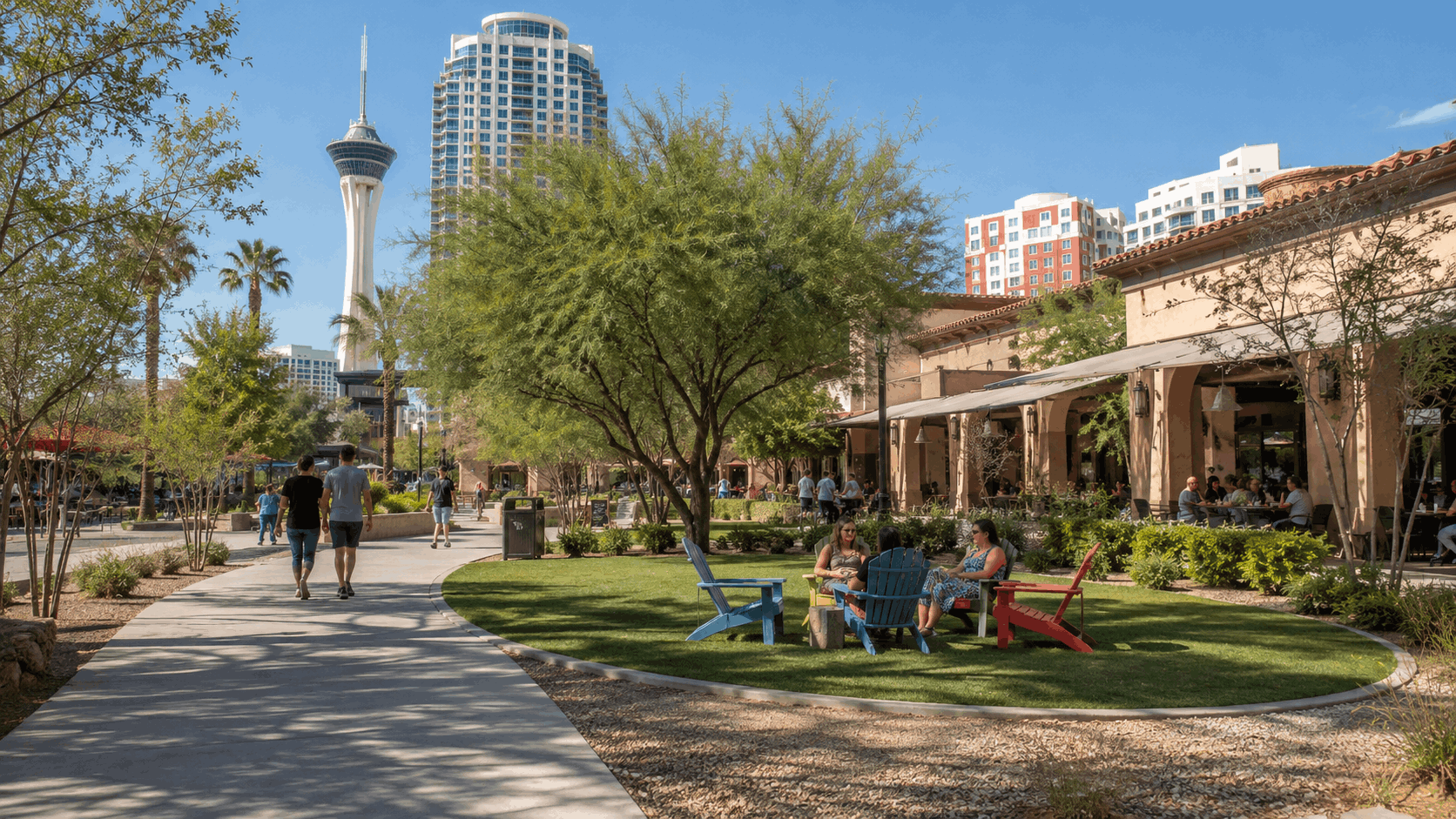
While Las Vegas is often seen as a car-centric city, there are several neighborhoods that offer surprising walkability with good access to cafes, parks, and other amenities. Areas like Downtown Las Vegas (DTLV), particularly around the Arts District and Fremont East, offer dense urban living with numerous coffee shops, restaurants, and cultural venues within easy reach. The historic sections of Henderson, such as Water Street District and parts of Green Valley, also provide a more suburban walkability with community parks and local eateries.
For those prioritizing green space and a slightly more relaxed pace, master-planned communities like Summerlin and Anthem in Henderson offer extensive trail systems, neighborhood parks, and village centers with cafes and shops that are designed for pedestrian access. It all comes down to the property, the price, and the condition, but finding a walkable spot in the Las Vegas Valley is definitely possible if you know where to look and what tradeoffs you're willing to make.
Who This Is For
If you're looking for:
- First-Time Homebuyers: You want an area with character, amenities, and potentially lower price points than some luxury communities. You're willing to trade a larger yard for proximity to urban conveniences.
- Young Professionals: You value an active social scene, diverse dining options, and the ability to walk or bike to work or entertainment. Downtown Las Vegas is likely on your radar.
- Families: You need safe parks, good schools (verify directly with the district), and perhaps a community feel where kids can play outdoors. Summerlin or parts of Henderson might be a better fit than DTLV.
- Retirees: You're looking for convenience, a sense of community, and easy access to services, medical facilities, and leisure activities without always needing a car. Age-qualified communities within walkable areas are an option.
- Out-of-State Buyers/California Relocation: You're used to more walkable cities and want to find that balance in Las Vegas, understanding that "walkable" here might look different than in San Francisco or Los Angeles.
- Investors (especially short-term/mid-term rentals): You're looking for properties in areas that appeal to tourists or temporary residents who value walkability to attractions, dining, and public transport.
Introduction: Beyond the Strip – Discovering Las Vegas's Pedestrian-Friendly Side
When most people think of Las Vegas, walkability isn't usually the first thing that comes to mind. The image is often one of sprawling suburbs, endless highways, and a reliance on cars to get anywhere. And for a large part of the valley, that's true. However, that headline does not tell the whole story. As a local real estate professional who has lived and worked in this valley for years, I've seen a growing demand for neighborhoods where residents can actually walk to a coffee shop, grab a bite, or enjoy a park without hopping in a car. This is especially true for those relocating from more pedestrian-friendly cities or those looking for a different lifestyle here.
Finding these spots isn't always obvious. Many online walkability scores don't fully capture the nuances of local amenities or the quality of pedestrian infrastructure. My job is to help you understand your options and look at the full picture. We're not just talking about sidewalks; we're talking about a lifestyle where daily errands, social activities, and access to green spaces are genuinely accessible by foot. Let’s break it down and look at what makes the most sense for your situation.
Deep Dive: Las Vegas's Most Walkable Neighborhoods
Downtown Las Vegas (DTLV): The Urban Core
The Good: DTLV is arguably the most genuinely walkable urban environment in the entire valley. The Arts District, in particular, is a vibrant hub of galleries, breweries, vintage shops, and diverse restaurants, many with outdoor seating. Fremont East offers a lively nightlife, unique bars, and proximity to Fremont Street Experience. There are numerous coffee shops, from local favorites like Makers & Finders to larger chains. Connectivity is good with The Deuce bus service and the Downtown Loop shuttle. Parks like Symphony Park (home to The Smith Center) and the smaller pocket parks offer some green space, though not expansive natural parks.
The Bad & What to Watch Out For: While improving, DTLV still has areas that feel less safe, especially at night. Homelessness is a visible issue. Residential options are primarily high-rise condos (like The Ogden or Juhl) or older, sometimes historic, single-family homes that require significant renovation. Parking can be a challenge. The numbers still have to make sense here; don't just look at the list price. You need to look at the full picture of HOA fees, property taxes, and potential for appreciation, which can be volatile in urban cores.
Who it's for: Young professionals, artists, empty nesters, investors looking for short-term rental opportunities (verify zoning and HOA rules carefully).
Summerlin: Master-Planned Walkability
The Good: Summerlin is a master-planned community known for its extensive network of walking and biking trails, over 250 parks, and village centers designed for pedestrian access. Areas like Downtown Summerlin offer an outdoor mall experience with high-end shops, restaurants, and entertainment, all walkable within the core. Several village centers, such as The Arbors, The Gardens, and Trails Village, have their own grocery stores, cafes, and local services that residents can walk to. The overall aesthetic is clean, well-maintained, and family-friendly.
The Bad & What to Watch Out For: While individual village centers are walkable, getting between them often requires a car. This is not a dense urban environment like DTLV. The price point in Summerlin is generally higher, especially for homes close to amenities. HOA fees are common and can be substantial. What works for one buyer may not work for another; some find the master-planned feel a bit sterile. The property has potential, but potential still has a price.
Who it's for: Families, move-up buyers, luxury homebuyers, retirees, out-of-state buyers seeking a high quality of life with amenities.
Henderson's Green Valley & Water Street District: Suburban Charm with Access
The Good: Henderson offers a different flavor of walkability. The Water Street District, the historic heart of Henderson, has undergone significant revitalization. It now boasts a growing number of local restaurants, breweries, shops, and a public plaza that hosts events. It's an authentic downtown feel with a strong community vibe, and it's quite walkable within its core. Green Valley, one of Henderson's original master-planned communities, features tree-lined streets, numerous neighborhood parks, and several commercial centers with grocery stores, cafes, and restaurants that are accessible by foot or a short bike ride, depending on your specific location. Areas around Paseo Verde Parkway and Eastern Avenue offer a good mix.
The Bad & What to Watch Out For: Similar to Summerlin, walkability in Green Valley is often localized to specific commercial nodes. You won't walk from one end of Green Valley to the other for daily needs. Water Street is still developing, and residential options are more limited, often older homes or newer townhomes/condos. Some areas in Green Valley can feel a bit dated depending on when they were built. Don’t just look at the list price; verify the condition and age of systems.
Who it's for: Families, first-time homebuyers, retirees looking for a community feel, those seeking a slightly more affordable alternative to Summerlin with good amenities.
Southwest Las Vegas (Rhodes Ranch, Mountain's Edge, Southern Highlands): Emerging Walkability
The Good: While largely car-dependent, some newer master-planned communities in the Southwest are incorporating more walkable elements within their village centers. Rhodes Ranch and Mountain's Edge, for instance, have community parks, trails, and sometimes a central marketplace with a cafe or grocery store. Southern Highlands has a well-regarded golf course community with a central village area that offers some pedestrian-friendly access to shops and dining. These areas are generally newer with modern homes.
The Bad & What to Watch Out For: The walkability here is often very limited to the immediate community hub. You're still relying heavily on a car for most errands and entertainment. These areas are further from the Strip and Downtown, which can mean longer commute times. New construction is prevalent, but resale homes are also available. Make sure the deal works for your goals, especially if you're prioritizing true walkability.
Who it's for: Buyers seeking newer homes, families, those who appreciate planned communities with green spaces, but understand that a car is still essential.
Hidden Gems: What Locals Know That Google Maps Doesn't Show
- Huntridge Neighborhood (DTLV adjacent): Just south of the Arts District, Huntridge is one of Las Vegas's oldest neighborhoods, featuring historic homes and a growing number of local businesses. It's a bit grittier than the Arts District but offers a unique character and genuine walkability to some local cafes and shops that Google Maps might not highlight as "destinations." It's an area with potential, but potential still has a price, and you need to verify the numbers.
- "Old Town" Henderson (around Water Street): Beyond the immediate Water Street plaza, the surrounding historic residential streets offer a unique charm. Many of these homes are older, but they're steps away from the revitalized district and its amenities. It's a great place to find a local coffee shop or eatery that might not be a huge tourist draw but is a neighborhood staple.
- Specific Summerlin Village Parks: While Downtown Summerlin gets all the press, many of the smaller village parks like The Gardens Park (with its large playground and community center) or The Trails Park often have a small cafe or deli nearby that serves as a local meeting spot. These aren't always prominently listed but are well-known to residents.
- Desert Shores (Northwest Las Vegas): This community, built around man-made lakes, offers beautiful walking paths along the water and a small "village center" with a few restaurants and a cafe right on the lake. It's a unique setting for Las Vegas and provides a very pleasant, albeit contained, walkable experience.
Common Mistakes Newcomers or Visitors Get Wrong
- Underestimating Distances: Las Vegas is geographically large. What looks like a short distance on a map can be a long, hot, and often unshaded walk. Always verify actual walking times and consider the summer heat.
- Confusing "Sidewalks" with "Walkability": Just because a street has sidewalks doesn't mean it's walkable. True walkability includes destinations (cafes, parks, shops) within a reasonable distance, safe crosswalks, and pleasant pedestrian environments. Many suburban areas have sidewalks but no real destinations.
- Ignoring the Heat: Walking in July or August when temperatures regularly exceed 100°F is a different experience than walking in milder months. Even in walkable areas, you might find yourself driving more during the peak summer.
- Overlooking HOA Rules: Especially in master-planned communities, HOA rules can dictate everything from paint colors to landscaping. For investors, some HOAs have strict rules on rentals, including short-term. You do not want to find this out after closing.
- Not Verifying "Park Access": While many communities boast parks, some are small tot lots, while others are large regional parks with extensive amenities. Verify the type and size of the park and its actual proximity to a potential home.
- Assuming Public Transit is Robust: Outside of the Strip and Downtown, public transportation (RTC) in Las Vegas is not as comprehensive or frequent as in many major cities. Relying solely on it for daily errands in a suburban walkable area can be challenging.
Frequently Asked Questions
Q: Is Las Vegas a walkable city overall?
A: No, not in the traditional sense of a major urban center like New York or San Francisco. The Strip is highly walkable, and Downtown Las Vegas offers a good urban walking experience. However, the vast majority of the Las Vegas Valley is car-dependent. That said, specific communities and neighborhoods are designed with pedestrian access to amenities in mind, as we've discussed.
Q: What's the best walkable neighborhood for families in Las Vegas?
A: For families, Summerlin generally offers the best combination of walkability within village centers, abundant parks, extensive trail systems, and a family-friendly environment. Parts of Green Valley in Henderson also provide good options with neighborhood parks and local amenities. You need to look at the full picture of schools (verify directly), safety, and community feel.
Q: Are there any walkable areas near the Strip?
A: The Strip itself is highly walkable, but residential areas immediately adjacent are scarce and often high-rise luxury. For true residential walkability with cafes and parks, your best bet would be Downtown Las Vegas (DTLV), which is about a 15-20 minute drive from the Strip. DTLV offers a more authentic urban neighborhood feel compared to the tourist-centric Strip.
Q: How does Las Vegas walkability compare to California cities?
A: For many California-to-Las Vegas relocation buyers, the walkability here will feel different. Even the most walkable areas in Las Vegas generally have less density and fewer continuous pedestrian zones than cities like San Francisco, Santa Monica, or even downtown San Diego. However, places like DTLV or the village centers of Summerlin do offer a good pedestrian experience within their defined areas. It's about managing expectations and understanding the local context.
Q: What about safety in walkable neighborhoods?
A: Safety is always a concern in any city. In general, master-planned communities like Summerlin and Henderson's Green Valley are considered very safe. Downtown Las Vegas has areas that are very vibrant and safe, particularly during the day and in well-lit, active zones like the Arts District and Fremont East. However, like any urban core, it has its challenges, and it's always wise to be aware of your surroundings, especially at night. Every property is different, and so is every block.
Q: Are there any walkable neighborhoods with good public transport access?
A: Downtown Las Vegas has the best public transport access, with multiple bus routes (including The Deuce) and the free Downtown Loop shuttle. This makes it easier to get around without a car. Outside of DTLV and the Strip corridor, public transport is less comprehensive, so even in somewhat walkable suburban areas, you'll likely still need a car for many destinations.
Q: Can I really live without a car in a walkable Las Vegas neighborhood?
A: It's challenging but possible in very specific areas like the heart of Downtown Las Vegas, especially if your job is also downtown. For most other "walkable" neighborhoods, you might be able to walk to some daily amenities, but a car will still be necessary for groceries, doctors' appointments, or anything outside your immediate radius. The goal is to make a smart decision, not just a fast one. Make sure the deal works for your goals.
Q: What should I look for in a walkable neighborhood for investment properties?
A: For investment properties, focus on areas with high demand for rentals, proximity to major employment centers (like the Strip, Downtown, or medical districts), and a strong amenity base. DTLV, especially the Arts District, can be attractive for short-term or mid-term rentals due to its unique vibe and walkability to entertainment. Always verify zoning, HOA rules, and potential rental income. The numbers still have to make sense. Verify rents, expenses, repairs, property values, financing, zoning, permits, and potential uses before making an investment decision.
Conclusion: Finding Your Footing in Las Vegas
Finding a walkable neighborhood in Las Vegas with good access to cafes and parks is absolutely achievable, but it requires a clear understanding of what "walkable" means in our unique desert city. From the urban energy of Downtown Las Vegas to the meticulously planned communities of Summerlin and the community-focused vibe of Henderson's Water Street, there are distinct options for different lifestyles and budgets. It all comes down to the property, the price, and the condition, and what tradeoffs you're comfortable making.
The key takeaway is that you need to look at the full picture and understand that every property is different. Don't just rely on general impressions or online scores. If you're serious about finding a home where you can enjoy the pedestrian lifestyle in the Las Vegas Valley, I'm here to make the process easier to understand. My job is to help you understand your options and ensure the numbers make sense for your goals.
Message me if you want to talk through your options for a walkable Las Vegas neighborhood. Let’s look at what makes the most sense for your situation.
Kyle Fujimoto, Nevada Real Estate License No. S.0184988, Platinum Real Estate Professionals
Kyle Fujimoto, California DRE License No. DRE 02230384, affiliated with Dynasty Real Estate
Equal Housing Opportunity.
Information is deemed reliable but not guaranteed and should be independently verified.
Price, availability, property details, incentives, and terms are subject to change without notice.
This content is for general informational purposes only and is not legal, tax, financial, insurance, appraisal, inspection, or lending advice.
Financing is subject to lender approval. Rates, payments, terms, and program availability may change. This is not a commitment to lend.
Seller concessions, incentives, and closing-cost credits are subject to the purchase agreement, appraisal, lender approval, and applicable loan-program limits.
Builder pricing and incentives may change and may require the use of the builder’s preferred lender, title company, or other provider.
Past market performance and historical trends do not guarantee future results.
Investment figures are estimates only and should be independently verified. No appreciation, rental income, occupancy, cash flow, equity, or investment return is guaranteed. Verify rents, expenses, repairs, property values, financing, zoning, permits, and potential uses before making an investment decision.
Property condition statements are based on available information and are not a substitute for professional inspections.
Square footage, lot size, room dimensions, boundaries, and other measurements are approximate and should be independently verified.
School information should be verified directly with the appropriate school district.
Crime, commute, neighborhood, zoning, permit, and property-use information should be independently verified with the appropriate source.
Brokerage compensation and fees are negotiable and subject to a written agreement.
Not intended to solicit a buyer or seller currently under an exclusive agreement with another real estate brokerage.
Categories
Recent Posts

GET MORE INFORMATION

REALTOR® Lic# S.0184988